Tool Engineer
a guide to: Career
What is a Tool Engineer?
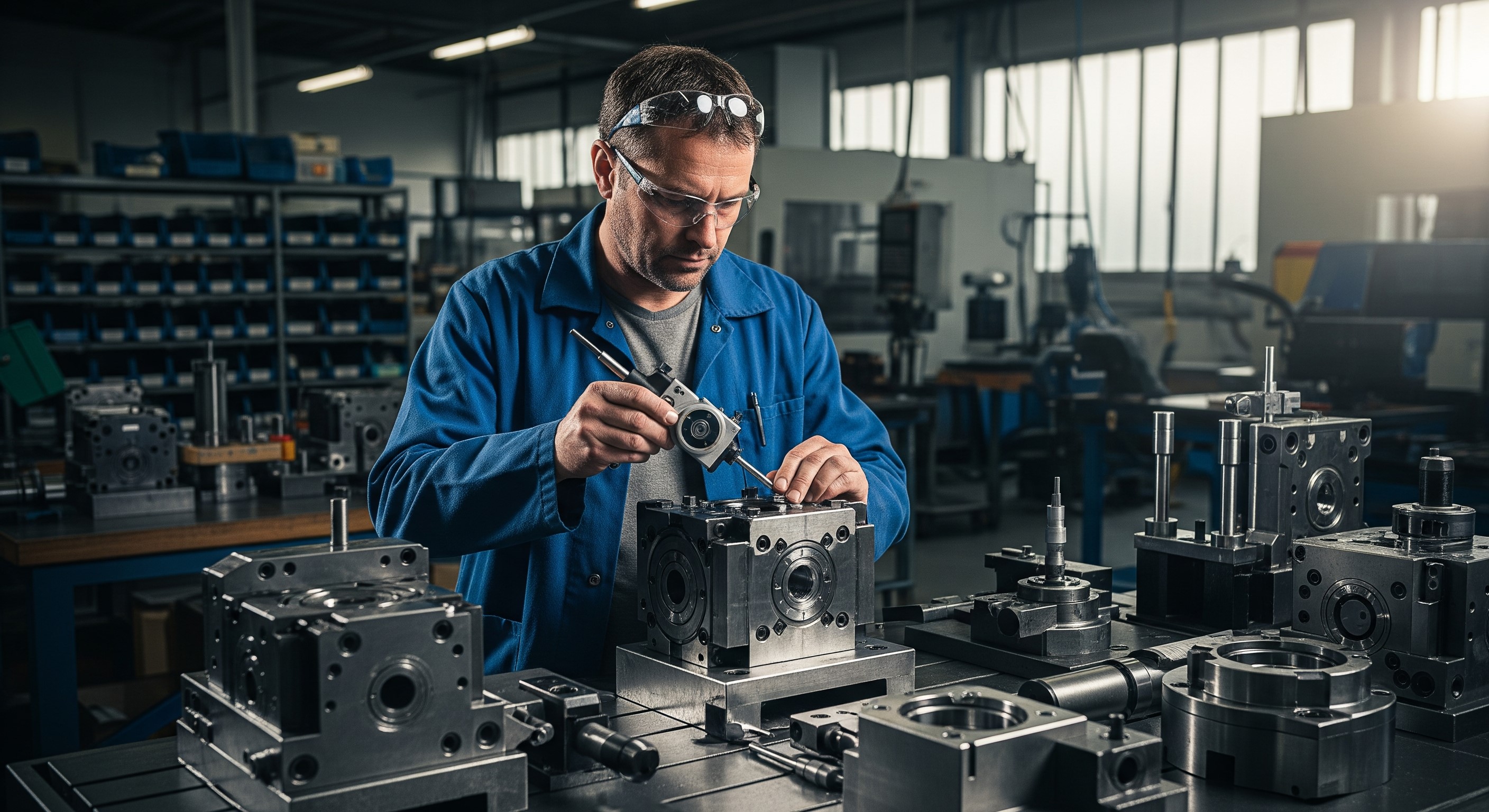
A Tool Engineer specializes in the design, development, and maintenance of specialized tools, dies, molds, jigs, and fixtures used in mass production. They ensure that manufacturing equipment operates with high precision, maximizing production efficiency and maintaining strict quality standards.
Why is a Tool Engineer important?
Tool Engineers are the backbone of high-volume manufacturing. They design the custom interfaces that allow machines to produce complex parts consistently, ensuring that every product—from smartphone components to car doors—is identical and cost-effective to produce.
- Production Precision:
- Ensures fibers, fabrics, and garments are manufactured to exact specifications, reducing defects and maintaining high-quality standards.
- Cost Reduction:
- Optimizes processes, machinery, and material usage to minimize waste, downtime, and overall production expenses.
- Mass Production:
- Enables scaling from small runs to millions of units efficiently, while maintaining consistency and uniformity across products.
- Innovation Support:
- Develops advanced textiles, specialty fibers, and functional fabrics to meet cutting-edge industry requirements and new market demands.
Ultimately, Tool Engineers turn conceptual designs into physical reality. Without their expertise, modern mass production would be impossible, as they provide the essential "missing link" between a digital design and the physical manufacturing floor.
Education Pathways
Option 01
Stream

Important Subjects
| # | Subject |
|---|---|
| 1 | Press Tool Design – Designing dies for cutting, forming, and shaping sheet metal components. |
| 2 | Mould Design – Creating precision cavities for plastic injection, die casting, and other forming processes. |
| 3 | Jigs & Fixtures – Designing devices to hold, guide, and support parts during machining or assembly. |
| 4 | CNC Programming – Writing code for Computer Numerical Control machines for high-precision operations. |
| 5 | Metrology – The science of measurement to ensure dimensional accuracy and quality control of tools. |
| 6 | Material Science – Selecting suitable steels, alloys, and composites for tool longevity and performance. |
| 7 | CAD/CAM – Using software like SolidWorks, NX, or CATIA for digital tool design and simulation. |
| 8 | Metal Cutting – Studying mechanics, forces, and tool geometry for efficient material removal. |
| 9 | Heat Treatment – Hardening and tempering tools through thermal processes to enhance durability. |
| 10 | Hydraulics – Applying fluid power systems to operate and control large-scale tools. |
| 11 | Finite Element Analysis (FEA) – Simulating stress, strain, and performance of tools before physical fabrication. |
| 12 | Process Planning – Determining the sequence of operations, tooling requirements, and workflow for efficient production. |
Where to study?
Career Progression for a Tool Engineer
Qualification Levels:
- Degree for entry roles;
- Degree & Certification added advantage.
Role Levels & Growth:
- Entry Level: Junior Tool Engineer - Tool Engineer
- Mid-Level: Tool Engineer - Senior Tool Engineer
- Senior Level: Senior Tool Engineer - Lead Tool Engineer
- Executive Level: Tool Manager - Plant Manager
Further Opportunities:
- Plant Head: Oversight of total manufacturing operations and global supply chain.
Sectors Offering
- Automotive & Auto Components: Tooling and dies for body panels, engine parts, and precision components.
- Manufacturing & Precision Engineering: Press tools, jigs, fixtures, and high-precision dies for mass production.
- Plastics & Injection Molding: Design and fabrication of molds for plastic parts, housings, and assemblies.
- Aerospace & Defense: High-tolerance tooling for structural components, engine parts, and specialized equipment.
- Consumer Durables: Dies, molds, and fixtures for appliances, electronics, and household products.
- Electronics & Electrical Equipment: Precision tooling for casings, connectors, and miniature components.
- Heavy Engineering & Machinery: Fabrication of large-scale dies, jigs, fixtures, and press tools for industrial machinery.
Expected Salary
Entry Level
- ₹4.5 - ₹7.5 LPA
Mid-Level
- ₹12.0 - ₹20.0 LPA
Senior Level
- ₹25.0 - ₹45.0 LPA
International
Entry Level
- $60,000 - $80,000 per annum
Mid/Senior Level
- $85,000 - $175,000 per annum
Design by Find Right Path