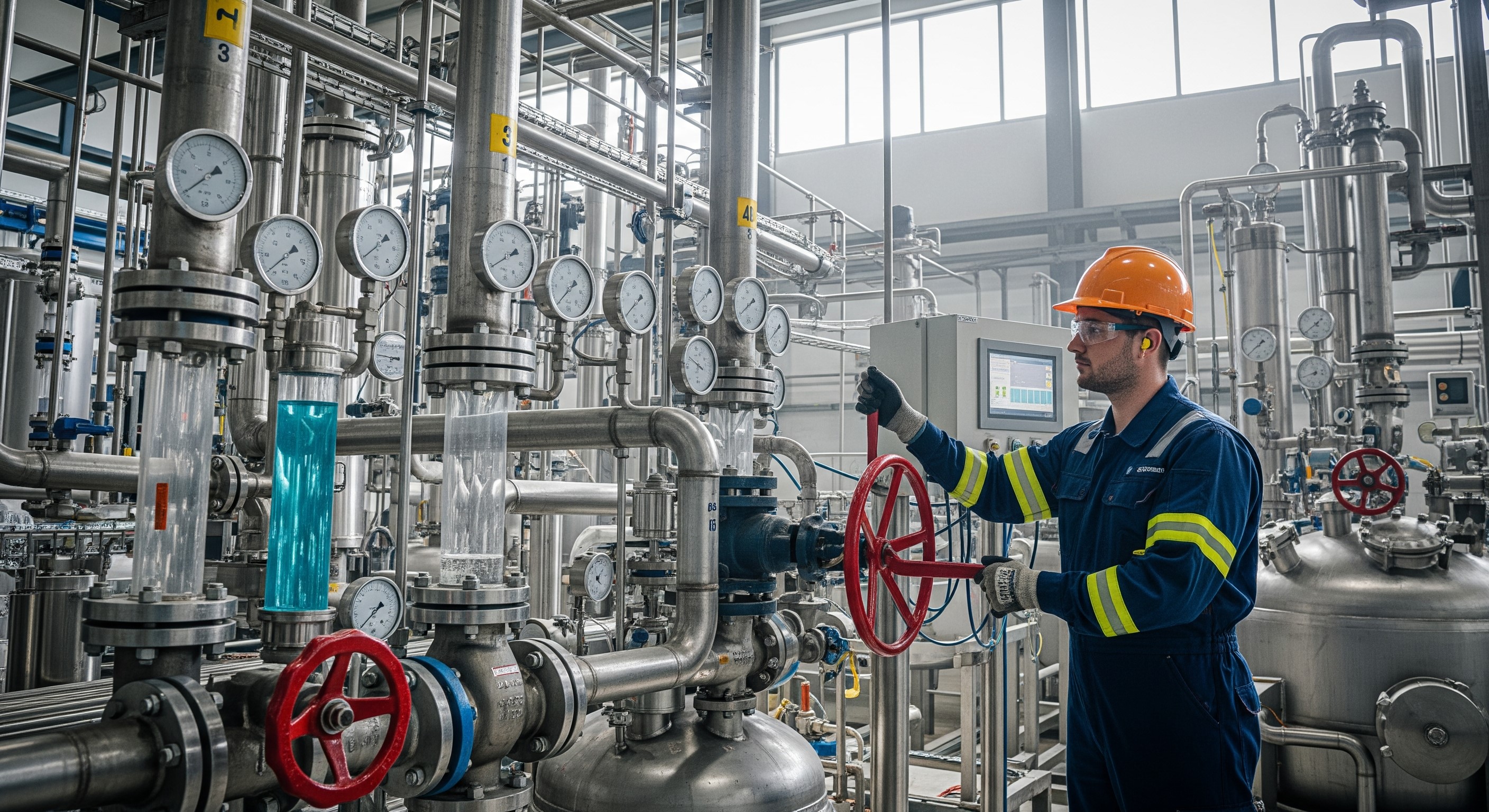
Process Engineer
a guide to: Career
What is a Process Engineer?
A Process Engineer focuses on designing, implementing, and optimizing industrial processes. They transform raw materials into finished products efficiently by balancing chemical, physical, and biological variables to ensure maximum productivity, safety, and cost-effectiveness within a manufacturing or production environment.
Why is a Process Engineer important?
Process Engineers are vital because they ensure production lines run safely and profitably. They minimize waste and resource consumption, directly impacting a company's bottom line while maintaining stringent quality and environmental standards.
- Safety:
- Designs systems to prevent hazardous failures and accidents.
- Efficiency:
- Optimizes resource use to reduce operational costs.
- Quality:
- Ensures consistent product output meeting specific standards.
- Sustainability:
- Reduces environmental impact through waste and emission control.
Ultimately, Process Engineering is the backbone of modern industry, bridging the gap between theoretical design and large-scale production to create sustainable, high-quality products that drive global economic growth safely.

Education Pathways
Option 01
Stream

Important Subjects
| # | Subject |
|---|---|
| 1 | Chemical Engineering Fundamentals – Core principles of reactions, separations, and process calculations for industries. |
| 2 | Mass Transfer – Movement of components between phases in industrial operations and equipment. |
| 3 | Heat Transfer – Energy transfer analysis for heaters, coolers, and heat exchangers in process plants. |
| 4 | Fluid Mechanics – Behavior of fluids in pipes, pumps, and systems under industrial operations. |
| 5 | Thermodynamics – Energy, work, phase behavior, and efficiency of processes in industry. |
| 6 | Chemical Reaction Engineering – Design and analysis of reactors and kinetics for industrial production. |
| 7 | Process Control – Monitoring and controlling process variables for stable operations using automation systems. |
| 8 | Process Design – Developing flow diagrams, equipment sizing, and plant layouts for efficient operations. |
| 9 | Safety Engineering – Hazard identification, risk analysis, and accident prevention in chemical industries. |
| 10 | Materials Engineering – Selection of materials for corrosion resistance, strength, and durability under process conditions. |
| 11 | Quality Engineering – Ensuring product consistency through standards, audits, process improvement, and control methods. |
| 12 | Environmental Engineering – Waste treatment, emissions control, and sustainability practices in industrial operations. |
Career Progression for a Process Engineer
Qualification Levels:
- B.Tech/B.E. for entry roles;
- M.Tech/M.E. and certifications added advantage.
Role Levels & Growth:
- Entry Level: Graduate Process Engineer - Junior Engineer
- Mid-Level: Process Engineer - Senior Engineer
- Senior Level: Senior Process Engineer - Lead / Principal Engineer
- Executive Level: Process Manager - Operations / Plant Manager
Further Opportunities:
- Director of Operations: High-level corporate strategy and global supply chain oversight.
Sectors Offering
- Chemical & Petrochemical: Manufacturing, processing, and refining of chemicals, polymers, fuels, and petrochemical products.
- Oil & Gas: Exploration, production, refining, and transportation of hydrocarbons with a focus on safety and efficiency.
- Pharmaceuticals: Development, production, and quality-controlled manufacturing of drugs, APIs, and healthcare products.
- Food & Beverage: Processing, preservation, quality assurance, and packaging of food and drink products.
- Power & Energy: Generation, transmission, and optimization of conventional and renewable energy systems.
- Semiconductor & Electronics: High-precision manufacturing of electronic components, chips, and cleanroom-based processes.
- FMCG & Manufacturing: Large-scale production of consumer goods with efficient, automated, and quality-driven operations.
- Biotechnology: Bioprocessing, fermentation, and development of biological products for medical and industrial use.
- Water & Waste Management: Treatment, recycling, desalination, and sustainable management of water and industrial waste.
- Cement, Steel, and Metals: Heavy process industries involving high-temperature operations, materials processing, and emissions control.
Expected Salary
Entry Level
- ₹5.0 - ₹8.0 LPA
Mid-Level
- ₹12.0 - ₹20.0 LPA
Senior Level
- ₹25.0 - ₹45.0 LPA
International
Entry Level
- $75,000 - $90,000 per annum
Mid/Senior Level
- $95,000 - $180,000 per annum
Design by Find Right Path