Mining Engineer
a guide to: Career
What is Mining Engineer?
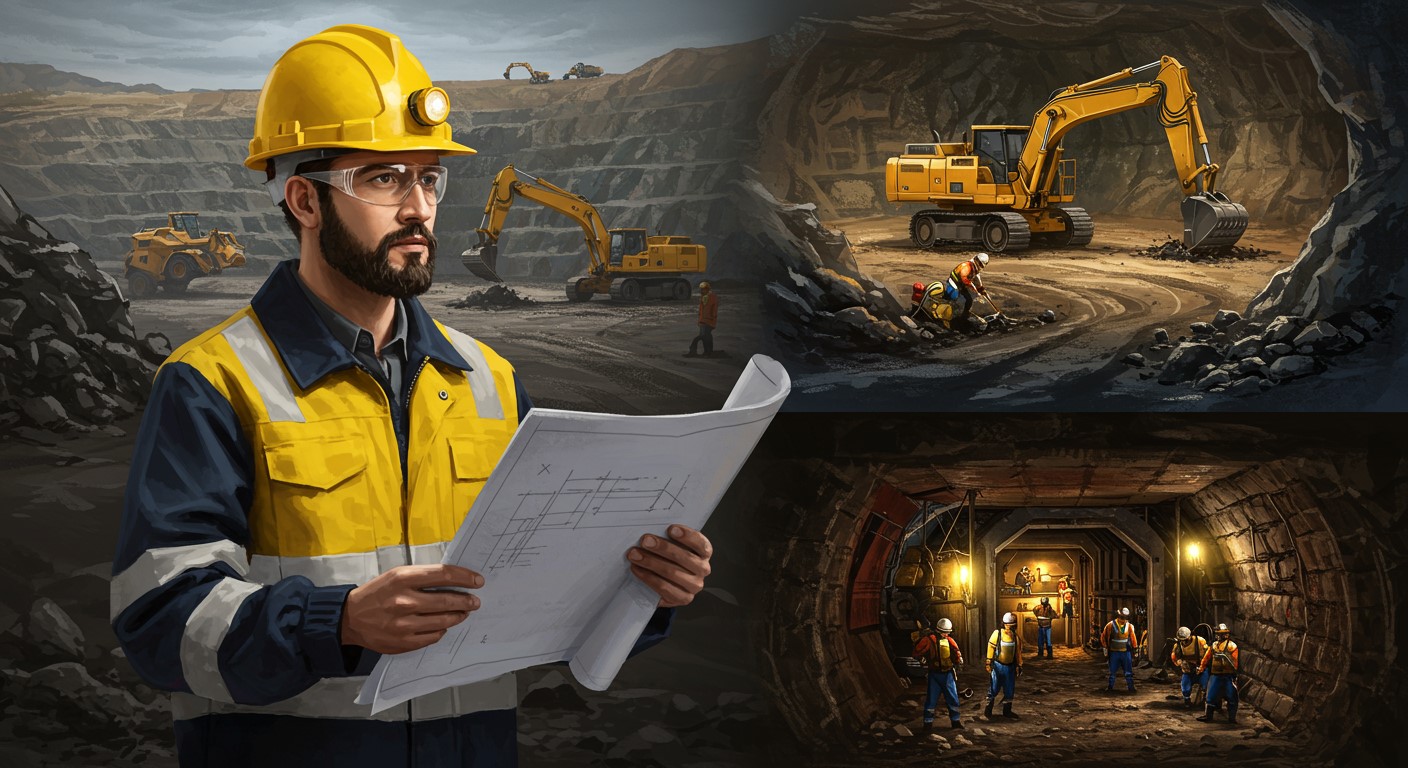
A Mining Engineer plans, designs, and manages the extraction of minerals from the earth. They ensure safe, efficient, and sustainable mining operations, applying engineering principles, geology, and technology to develop methods for mineral exploration, production, and environmental restoration.
Why is Mining Engineer Important?
Mining Engineers are essential for extracting valuable resources that power industries and economies. They ensure resource efficiency, worker safety, environmental protection, and technological innovation in mining operations worldwide.
- Resource Provision:
- Extracts essential raw materials.
- Safety Assurance:
- Designs safe mining operations.
- Environmental Stewardship:
- Manages reclamation and sustainability.
- Economic Viability:
- Optimizes extraction efficiency and costs.
Mining Engineers bridge industrial growth and environmental care. Their expertise ensures minerals are mined responsibly, promoting economic development, energy security, and sustainability across local and global mining operations.

Education Pathways
Option 01
Stream

Important Subjects
| # | Subject |
|---|---|
| 1 | Mine Surveying – Measurement techniques for mine design and planning. |
| 2 | Rock Mechanics – Study of rock behavior under stress and excavation. |
| 3 | Drilling and Blasting – Controlled rock fragmentation for mineral extraction. |
| 4 | Mine Ventilation – Airflow systems ensuring safety and worker health. |
| 5 | Mine Safety Engineering – Risk assessment and accident prevention methods. |
| 6 | Surface Mining – Techniques for extracting minerals from open pits. |
| 7 | Underground Mining – Methods for safe deep-earth mineral extraction. |
| 8 | Mining Machinery – Study of machines used in mining operations. |
| 9 | Mineral Processing – Techniques to refine and separate valuable minerals. |
| 10 | Environmental Management – Reducing mining’s ecological impact. |
| 11 | Geology – Understanding earth materials and mineral deposits. |
| 12 | Mine Economics – Cost analysis and resource management in mining. |
Where to study?
Career Progression for an Agricultural Engineer
Qualification Levels:
- B.Tech/B.E. Mining Engineering.
- B.Tech/B.E. + Experience
- M.Tech/MBA + Significant Experience
Role Levels & Growth:
- Entry-Level (Junior Mining Engineer, Trainee, Technician)
- Mid-Level (Mining Engineer, Mine Planner, Supervisor, Assistant Manager)
- Senior/Management-Level (Senior Mining Engineer, Mine Manager, Operations Head, General Manager, Consultant)
Further Opportunities:
- Leadership roles overseeing entire mine sites or departments, strategic planning, budgeting, and corporate management. Further opportunities include becoming an independent consultant or pursuing research/academia (Ph.D.).
Expected Salary
Entry Level
- ₹4.0 - ₹7.0 LPA
Mid-Level
- ₹8.0 – ₹15.0 LPA
Senior Level
- ₹18.0 – ₹30.0 LPA
International
Entry Level
- $50,000 – $70,000 per annum
Mid/Senior Level
- $80,000 – $180,000 per annum
Sectors Offering
- Mining and Mineral Extraction Companies
- Oil and Gas Industry
- Steel and Cement Industries
- Geological and Environmental Consulting Firms
- Equipment Manufacturing Firms
- Power Generation and Energy Sector
- Government Departments (Coal India, ONGC, GSI, etc.)
- Research and Academic Institutions
Design by Find Right Path