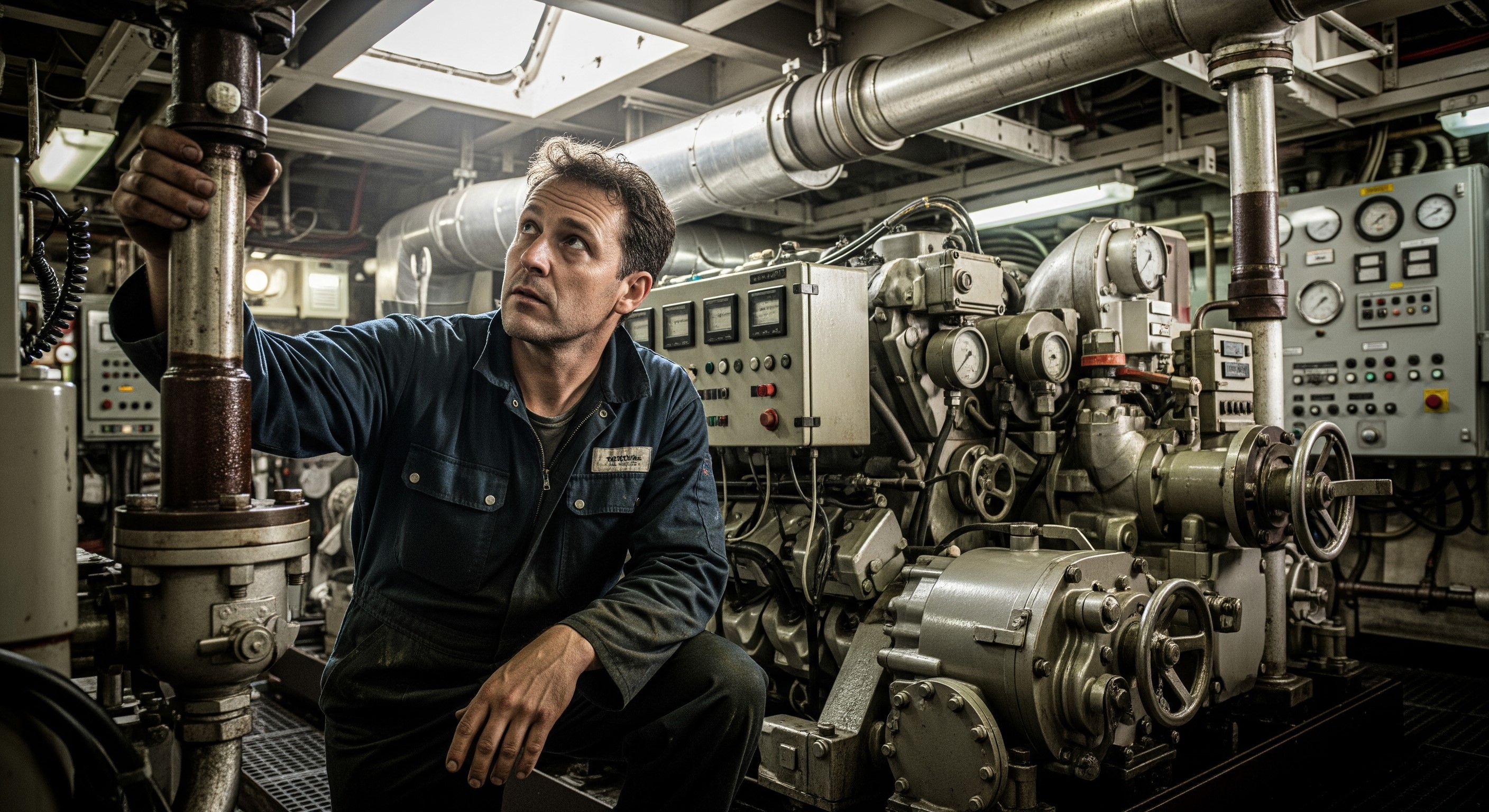
Marine Engineer
a guide to: Career
What is a Marine Engineer?
A Marine Engineer is a professional responsible for the design, construction, operation, and maintenance of mechanical systems on board ships, boats, and offshore structures. They manage complex machinery like propulsion engines, power generators, and fuel systems to ensure safe and efficient maritime voyages.
Why is a Marine Engineer important?
Marine Engineers are the technical backbone of global trade. They ensure that vessels remain seaworthy, minimizing mechanical failures during long transoceanic journeys, which is vital for the steady flow of international cargo and the safety of the crew.
- Vessel Reliability:
- Prevents engine breakdowns and ensures reliable propulsion and power generation for ships operating in harsh and unpredictable sea conditions.
- Safety Assurance:
- Maintains fire-fighting systems, life-saving appliances, and emergency power systems to safeguard crew, passengers, and vessels at sea.
- Environmental Protection:
- Manages pollution prevention systems such as oily water separators, ballast water treatment, and emission controls to protect the marine environment.
- Economic Impact:
- Enables over 90% of global trade by keeping cargo ships, tankers, and marine vessels operational, efficient, and compliant with international standards.
Without Marine Engineers, the global supply chain would collapse. Their technical expertise allows for the safe and sustainable movement of essential goods across the world's oceans in an increasingly connected economy.

Education Pathways
Option 01
Stream

Important Subjects
| # | Subject |
|---|---|
| 1 | Marine Internal Combustion Engines – Study of high-power diesel engines used for propulsion and power generation on sea-going vessels. |
| 2 | Naval Architecture – Design and analysis of ship structures to ensure stability, buoyancy, strength, and seaworthiness. |
| 3 | Applied Thermodynamics – Analysis of heat energy transfer in marine engines, boilers, turbines, and onboard power systems. |
| 4 | Marine Auxiliary Machinery – Operation and maintenance of pumps, compressors, heat exchangers, steering gear, and refrigeration systems. |
| 5 | Fluid Mechanics – Understanding the behavior of liquids and gases in marine pipelines, cooling systems, fuel systems, and ballast operations. |
| 6 | Control Engineering – Implementation of automation, sensors, and monitoring systems for efficient engine room operations and safety. |
| 7 | Ship Construction – Study of shipbuilding processes including hull fabrication, welding, compartmentalization, and corrosion protection. |
| 8 | Electrical Machines – Operation of generators, motors, switchboards, and power distribution systems on board ships. |
| 9 | Seamanship & Survival – Essential knowledge of shipboard safety, emergency procedures, survival techniques, and basic navigation skills. |
| 10 | Material Science – Study of metals, alloys, and composites used in marine applications with focus on corrosion resistance and durability. |
| 11 | Marine Boilers – Operation, maintenance, and safety of steam generating systems used for heating, auxiliary power, and cargo handling. |
| 12 | Strength of Materials – Analysis of stress, strain, bending, and load distribution to prevent structural failure in ships and machinery. |
Career Progression for a Marine Engineer
Qualification Levels:
- B.Tech/B.E. for entry roles;
- M.Tech/M.E. or certifications add advantage.
Role Levels & Growth:
- Entry - Junior Engineer - Sea experience
- Officer - Fourth Engineer - Engine watchkeeping
- Senior Officer - Second Engineer - Machinery in-charge
- Leadership - Chief Engineer - Full ship responsibility
- Shore-Based - Technical Superintendent - Fleet operations
Further Opportunities:
- Class IV Engineer
- Class II Engineer
- Class I Engineer
- Fleet Manager
- Maritime Consultant
Sectors Offering
- Merchant Navy (Cargo & Container Ships): Operating and maintaining propulsion systems, auxiliary machinery, and safety equipment on global cargo and container vessels.
- Oil Tankers & LNG Carriers: Managing high-power engines, cargo pumping systems, boilers, and safety systems on crude oil, chemical, and liquefied gas carriers.
- Cruise Ships & Passenger Vessels: Maintaining propulsion, electrical systems, HVAC, desalination plants, and hotel engineering services for luxury passenger ships.
- Offshore Oil & Gas Platforms: Operating heavy machinery, power generation units, compressors, and safety systems in offshore drilling and production installations.
- Port & Harbour Operations: Engineering support for port infrastructure, cranes, dock machinery, power systems, and vessel maintenance facilities.
- Shipyards & Dry Docks: Involved in shipbuilding, repair, retrofitting, dry-docking, welding, and inspection of marine vessels and structures.
- Marine Equipment Manufacturing: Designing and producing marine engines, pumps, valves, propulsion systems, and onboard machinery.
- Maritime Training & Consultancy: Working as marine instructors, technical consultants, surveyors, and auditors for maritime education, compliance, and safety standards.
Expected Salary
Entry Level
- ₹4.0 - ₹9.0 LPA
Mid-Level
- ₹15.0 - ₹28.0 LPA
Senior Level
- ₹45.0 - ₹70.0 LPA
International
Entry Level
- $4,000 - $15,000 per annum
Mid/Senior Level
- $25,000 - $220,000 per annum
Design by Find Right Path