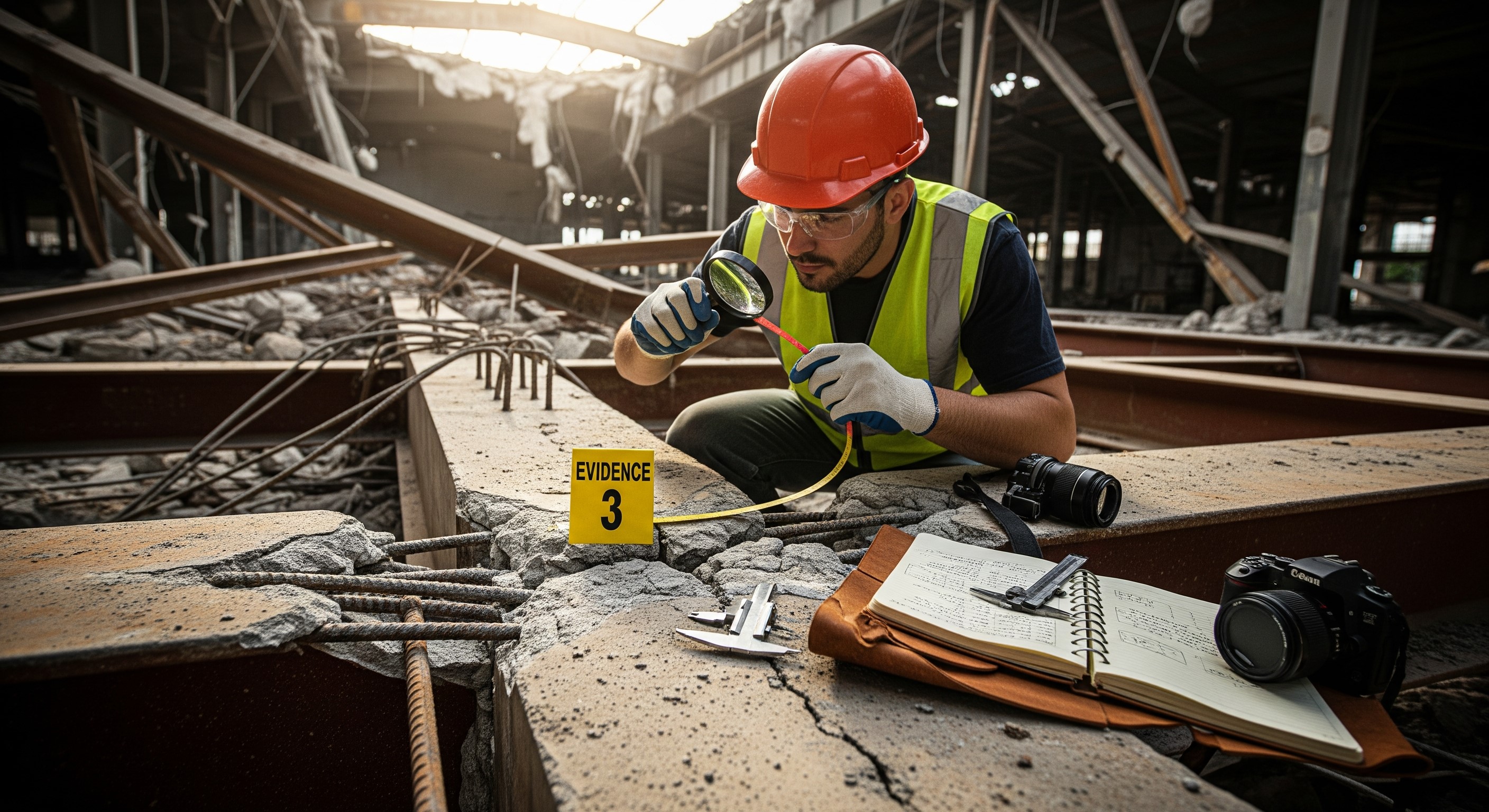
Forensic Engineer
a guide to: Career
What is a Forensic Engineer?
A Forensic Engineer investigates failures of structures, materials, products, or systems by applying engineering principles to determine causes, responsibilities, and preventive measures, often supporting legal, insurance, and safety-related investigations.
Why is a Forensic Engineer important?
Forensic Engineers are vital for identifying why critical systems fail. Their investigations prevent future disasters by uncovering design flaws, ensuring accountability in legal disputes, and guiding the development of safer engineering standards and building codes.
- Safety Improvement:
- Uncovers technical flaws to prevent repeat failures in infrastructure and products.
- Legal Support:
- Provides objective, scientific evidence for insurance claims and court litigation.
- Root Cause Analysis:
- Precisely determines whether a failure was due to design, material, or maintenance.
- Consumer Protection:
- Ensures manufacturers are held accountable for defective products or workmanship.
By meticulously reconstructing "what went wrong," Forensic Engineers transform catastrophic failures into valuable lessons, safeguarding public life and ensuring justice through the rigorous application of engineering science.

Education Pathways
Option 01
Stream

Important Subjects
| # | Subject |
|---|---|
| 1 | Failure Analysis – Systematic investigation of how and why a component, system, or structure failed. |
| 2 | Materials Science – Studying the properties of metals, polymers, composites, and concrete under mechanical and thermal stress. |
| 3 | Structural Integrity – Assessing load-bearing capacity, fatigue, and long-term stability of structures. |
| 4 | Accident Reconstruction – Applying physics and engineering principles to recreate vehicle collisions and industrial accidents. |
| 5 | Fire Dynamics – Analyzing the origin, spread, heat transfer, and behavior of fire incidents. |
| 6 | Digital Forensics – Recovering and analyzing data from damaged electronic systems, controllers, and embedded devices. |
| 7 | Ethics & Expert Testimony – Legal and ethical standards for providing unbiased scientific evidence in courts. |
| 8 | Fluid Mechanics – Investigating failures in pipelines, pumps, valves, and hydraulic systems. |
| 9 | Geotechnical Engineering – Analyzing soil and foundation failures, landslides, and earth-retaining structures. |
| 10 | Thermodynamics – Studying heat-related energy changes involved in explosions, fires, and engine failures. |
| 11 | Instrumentation – Using sensors, NDT tools, and microscopes to detect cracks, corrosion, and microscopic defects. |
| 12 | Legal Aspects – Understanding the Indian Evidence Act, criminal procedures, and liability laws relevant to forensic investigations. |
Career Progression for a Forensic Engineer
Qualification Levels:
- B.Tech/B.sc. for entry roles;
- M.Tech/M.sc. or certifications add advantage.
Role Levels & Growth:
- Entry - Junior Forensic Engineer - Case investigation exposure
- Mid-Level - Forensic Engineer - Independent case handling
- Senior - Senior Forensic Engineer - Complex investigations
- Lead - Principal Forensic Engineer - Expert leadership
- Expert - Forensic Consultant / Expert Witness - Global practice
Further Opportunities:
- Safety Analyst
- Senior Engineer
- Technical Lead
- Consultant
- Academia, Legal Advisory
Sectors Offering
- Structural & Construction Investigation Firms: Investigating building collapses, material failures, and construction defects in civil infrastructure.
- Insurance & Risk Assessment Companies: Analyzing accident causes, loss events, and technical failures for claims validation and risk mitigation.
- Legal & Litigation Support Services: Providing expert engineering opinions, technical reports, and courtroom testimony for legal cases.
- Government Safety & Regulatory Bodies: Supporting enforcement of safety standards, accident investigations, and regulatory compliance.
- Infrastructure & Transportation Authorities: Investigating failures in roads, bridges, railways, aviation systems, and public transport infrastructure.
- Oil & Gas and Industrial Plants: Examining explosions, fires, mechanical breakdowns, and process safety failures in industrial facilities.
- Manufacturing & Product Liability Firms: Assessing defective products, recalls, material failures, and manufacturing process issues.
- Disaster Investigation Agencies: Supporting post-disaster analysis of earthquakes, fires, industrial accidents, and large-scale system failures.
Expected Salary
Entry Level
- ₹4 - ₹8 LPA
Mid-Level
- ₹10.0 - ₹25.0 LPA
Senior Level
- ₹30.0 - ₹60.0 LPA
International
Entry Level
- $70,000 - $90,000 per annum
Mid/Senior Level
- $100,000 - $220,000 per annum
Design by Find Right Path