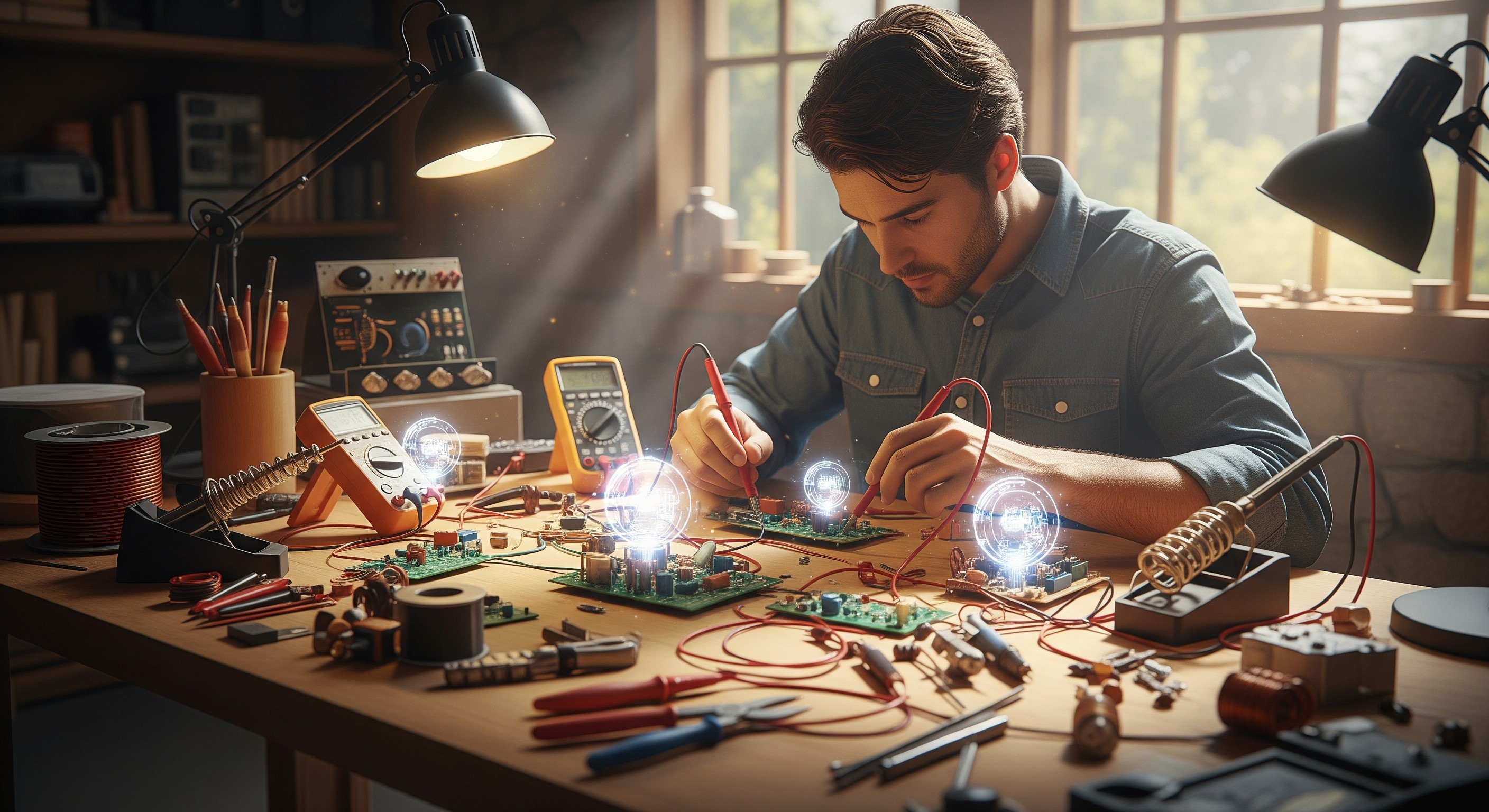
Electrical & Electronics Engineer
a guide to: Career
What is a Electrical & Electronics Engineer?
An Electrical & Electronics Engineer designs, develops, tests, and maintains electrical systems, circuits, and electronic devices. They work on power generation, communication, automation, and embedded systems, ensuring efficient, safe, and innovative solutions for modern technology and industrial needs.
Why is a Electrical & Electronics Engineer important?
This discipline is crucial for modern society, driving innovation in power generation, telecommunications, and computing. E&E Engineers develop critical infrastructure and technologies, powering everything from smart devices to transportation systems.
- Powering Systems:
- Design and manage essential electrical power infrastructure.
- Communication:
- Develop wireless, internet, and satellite communication systems.
- Technology Innovation:
- Create microprocessors, circuits, and electronic devices.
- Automation/Control:
- Implement automated control systems in various industries.
Electrical & Electronics Engineers are key to technological advancement, combining creativity and logic to build sustainable energy, smarter communication, and automation systems that shape modern civilization and industrial growth.

Education Pathways
Option 01
Stream

Important Subjects
| # | Subject |
|---|---|
| 1 | Electrical Circuits – Study of current, voltage, and power in networks. |
| 2 | Electromagnetic Fields – Principles governing electric and magnetic field behavior. |
| 3 | Analog Electronics – Design of amplifiers, oscillators, and transistor circuits. |
| 4 | Digital Electronics – Logic gates, circuits, and microprocessor-based design. |
| 5 | Power Systems – Generation, transmission, and distribution of electrical energy. |
| 6 | Control Systems – Feedback and automation control principles in machines. |
| 7 | Electrical Machines – Motors, generators, and transformers’ design and working. |
| 8 | Microprocessors & Microcontrollers – Hardware control in embedded systems. |
| 9 | Renewable Energy Systems – Solar, wind, and alternative power generation methods. |
| 10 | Instrumentation & Measurements – Precision measurement of electrical quantities. |
| 11 | Signal Processing – Analyzing and improving analog and digital signals. |
| 12 | Power Electronics – Conversion and control of electrical power using semiconductors. |
Career Progression for a Electrical & Electronics Engineer
Qualification Levels:
- B.Tech./B.E.
- M.Tech/M.S.
- Professional Engineer (PE) License (International)
Role Levels & Growth:
- Entry-Level Engineer (e.g., Trainee, Junior Design Engineer, Field Engineer) - Progress to Senior Engineer and Lead Engineer within 4-8 years. - Project Management Professional (PMP) Certification, Technical Specialization (e.g., VLSI, Robotics).
- Specialist/Senior Engineer (e.g., Design Specialist, R&D Engineer) - Move into Management Roles (e.g., Engineering Manager, Program Manager, Chief Engineer) or Consulting. - Doctorate (Ph.D.) for research or academia, Entrepreneurship.
- Supervisory/Consulting Role - Leadership roles like Director of Engineering or VP of Technology. - High-level Technical Consulting, Industry Regulation/Policy Making.
Expected Salary
Entry Level
- ₹3.5 - ₹6 LPA
Mid-Level
- ₹7.0 - ₹14.0 LPA
Senior Level
- ₹15.0 - ₹24.0 LPA
International
Entry Level
- $50,000 - $70,000 per annum
Mid/Senior Level
- $80,000 - $150,000 per annum
Sectors Offering
- Power Sector: Generation, Transmission, and Distribution (e.g., Power Plants, Utilities, Smart Grid).
- Electronics & Semiconductor: Design and manufacturing of chips, PCBs, and electronic products (e.g., VLSI Design).
- Telecommunications: Wireless (5G, 6G), Satellite Communication, Network Development.
- Automotive & Aerospace: Electric Vehicles (EVs), motor control, avionics, and navigation systems.
- Automation & Robotics: Industrial Control Systems, IoT, and embedded systems development.
- IT Services and Consulting: Hardware design, data centers, and technical consulting.
- Renewable Energy: Solar, Wind, and other sustainable power system integration.
- Defence & Government: Research, development, and maintenance of specialized equipment.
Design by Find Right Path