Civil Engineer
a guide to: Career
What is a Civil Engineer?
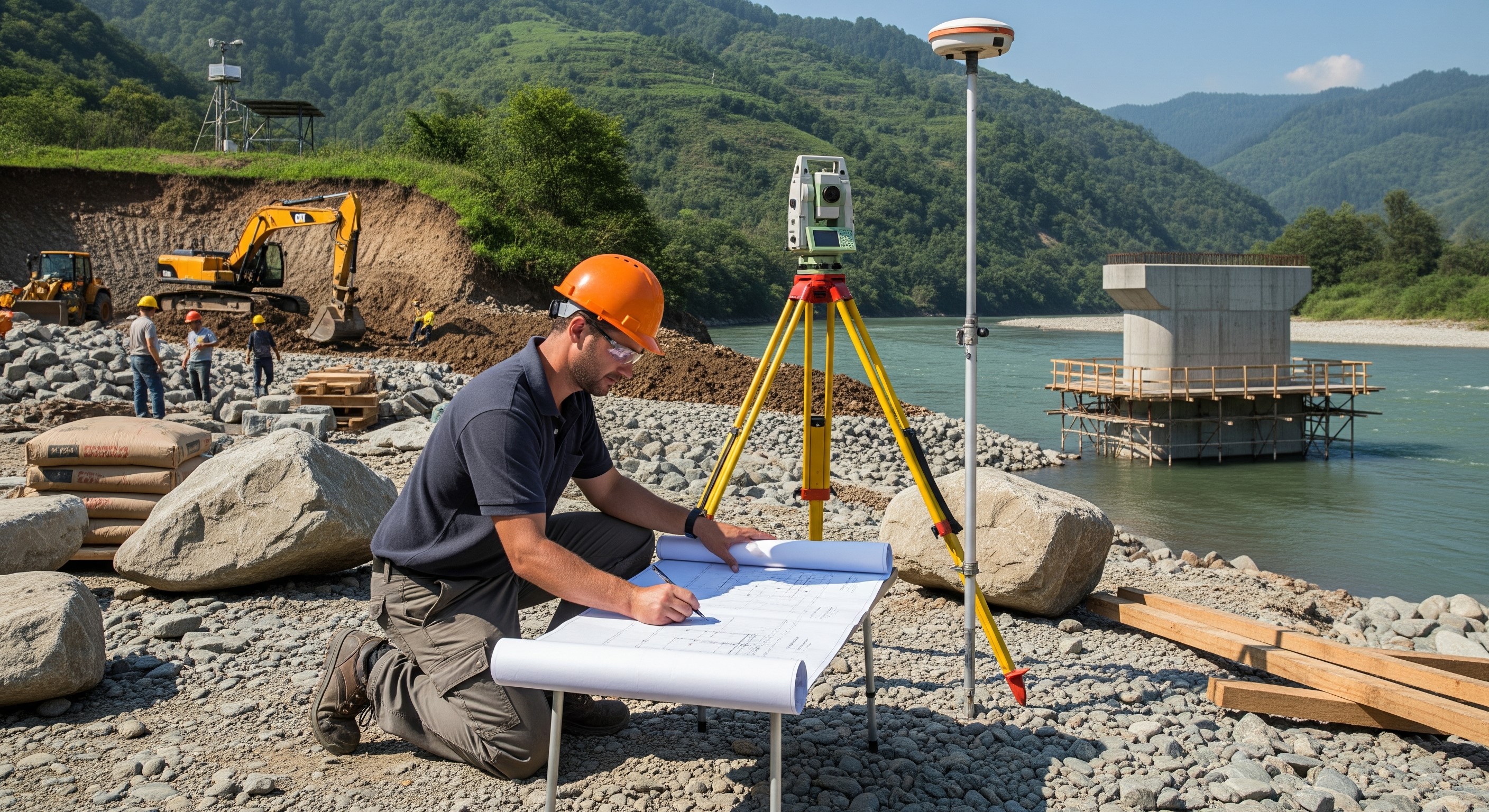
A Civil Engineer plans, designs, constructs, and maintains infrastructure such as buildings, roads, bridges, dams, and water systems, applying scientific, mathematical, and technical principles to create safe, efficient, and sustainable solutions for community development and environmental protection.
Why is a Civil Engineer important?
Civil Engineers shape the world’s infrastructure — enabling transportation, clean water, energy, and housing. They ensure projects are safe, cost-effective, sustainable, and resilient against natural and man-made challenges.
- Mass Production:
- Scales lab processes to industrial production.
- Sustainability:
- Designs eco-friendly, energy-efficient operations.
- Product Development:
- Creates new materials, fuels, and pharmaceuticals.
- Safety & Compliance:
- Ensures process and product adherence to regulations.
The Civil Engineer is the cornerstone of civilization, translating scientific principles into tangible, durable structures that support daily life and prepare us for the future.
Education Pathways
Option 01
Stream

Important Subjects
| # | Subject |
|---|---|
| 1 | Engineering Mechanics – Study of forces and their effects on physical bodies. |
| 2 | Structural Analysis – Predicting structural behavior under various loads and stresses. |
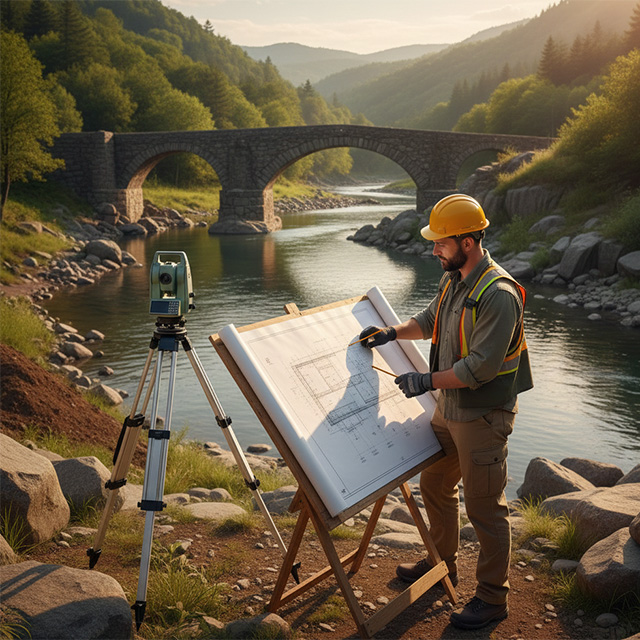
| 3 | Surveying & Geomatics – Measurement and mapping of the earth's surface and features. |
| 4 | Geotechnical Engineering – Study of soil, rock, and foundation design for structures. |
| 5 | Hydraulics & Fluid Mechanics – Study of fluid behavior, essential for water systems design. |
| 6 | Construction Materials – Properties, testing, and selection of concrete, steel, and wood. |
| 7 | Transportation Engineering – Planning, design, and operation of transport systems (roads, rail). |
| 8 | Concrete Technology – Science of concrete components, mix design, and quality control. |
| 9 | Environmental Engineering – Designing systems for water, waste treatment, and pollution control. |
| 10 | Water Resources Engineering – Managing and designing systems for water supply and irrigation. |
| 11 | Quantity Surveying & Estimation – Calculating project costs, materials, and contract management. |
| 12 | Project Management – Planning, execution, and control of construction projects efficiently. |
Career Progression for a Civil Engineer
Qualification Levels:
- B.Tech/B.E. (Entry)
- B.Tech./B.E. + Experience
- M.Tech./M.E. + Experience
Role Levels & Growth:
- Graduate Engineer Trainee / Junior Engineer – Assists in site supervision, surveying, and drafting.
- Site Engineer / Design Engineer / Project Engineer – Independently handles smaller projects or design modules.
- Senior Engineer / Construction Manager – Manages teams, supervises large projects, ensures compliance and quality.
- Project Manager / Consultant – Leads projects, cost estimation, and client coordination.
- Chief Engineer / Director / VP (Infrastructure) – Strategic decision-making, business expansion, or leadership roles.
Further Opportunities:
- R&D, government (PWD, NHAI, CPWD), entrepreneurship, academia, or international projects.
Expected Salary
Entry Level
- ₹3.0 - ₹6 LPA
Mid-Level
- ₹8.0 - ₹18.0 LPA
Senior Level
- ₹20.0 - ₹35.0 LPA
International
Entry Level
- $40,000 - $70,000 per annum
Mid/Senior Level
- $70,000 - $180,000 per annum
Sectors Offering
- Construction & Real Estate: Residential, commercial, and industrial projects.
- Infrastructure Development: Roads, bridges, tunnels, airports, railways, and ports.
- Water Resources & Environmental Engineering: Dams, irrigation, sanitation, flood control, and sustainability.
- Transportation & Urban Planning: City infrastructure, smart cities, public transport design.
- Energy & Power: Hydro, wind, solar, and nuclear power plant construction.
- Oil & Gas / Offshore Engineering: Pipelines, rigs, and refineries.
- Consultancy & Project Management: Design, planning, and cost consultancy.
- Government Departments: CPWD, PWD, NHAI, DRDO, ISRO, Defence Engineering Services.
- Research & Academia: Universities, labs, R&D centers in materials and infrastructure.
- Entrepreneurship: Construction firms, design consultancies, materials manufacturing.
Design by Find Right Path