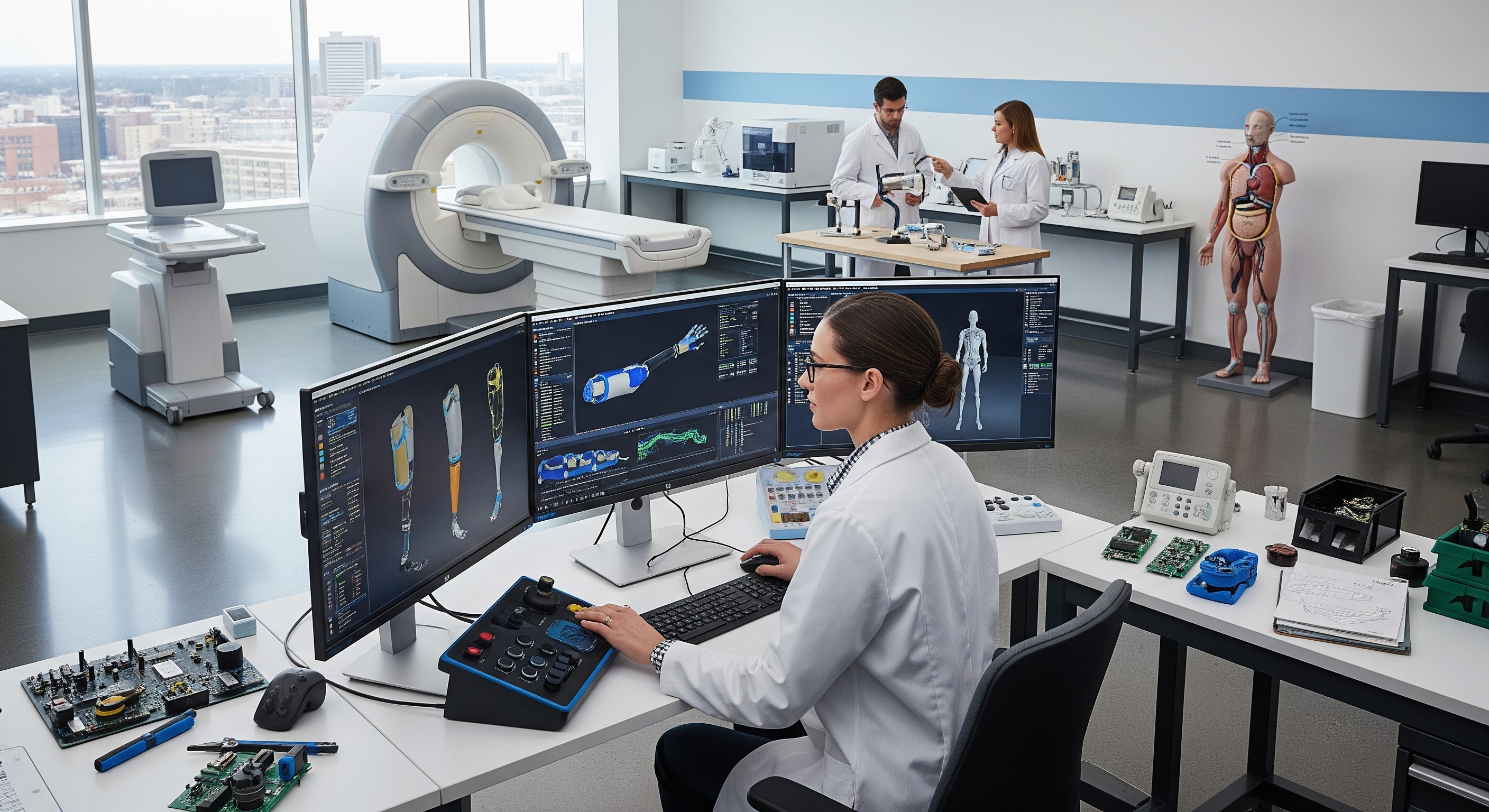
Biomedical Engineer
a guide to: Career
What is an Biomedical Engineer?
A Biomedical Engineer applies engineering principles and technologies to biology and medicine to design, develop, and maintain medical devices, diagnostic equipment, prosthetics, and healthcare systems. They collaborate with clinicians and scientists to enhance patient care, treatment outcomes, and rehabilitation.
Why is an Biomedical Engineer Important?
Biomedical Engineers bridge the gap between engineering and healthcare, enabling development of life-saving devices, improving diagnostics, supporting patient rehabilitation, and advancing medical research — all contributing critically to modern health systems and patient wellbeing.
- Device Innovation:
- Designing implants, prosthetics, and monitoring systems.
- Healthcare Equipment Maintenance and Safety:
- Ensuring medical devices function properly and meet safety standards.
- Research & Development:
- Working in R&D labs on biomaterials, imaging technologies, and tissue engineering.
- Cross-Disciplinary Role:
- Combining biology, engineering, mathematics, and computing to solve complex health problems.
A Biomedical Engineer plays a vital role at the intersection of technology and medicine — creating, evaluating, and supporting innovations that improve patient outcomes and healthcare delivery while driving medical progress and industry development.

Education Pathways
Option 01
Stream

Important Subjects
| # | Subject |
|---|---|
| 1 | Human Anatomy and Physiology – Understanding the body's structure, functions, and systems. |
| 2 | Biomaterials – Study of materials used for implants and medical device construction. |
| 3 | Biomechanics – Analysis of mechanical forces acting on biological tissues and systems. |
| 4 | Medical Instrumentation – Design and principles of electronic devices used in clinical settings. |
| 5 | Biomedical Signal Processing – Analyzing physiological data such as ECG and EEG for diagnosis. |
| 6 | Medical Imaging Systems – Principles and technology behind X-ray, MRI, CT, and Ultrasound imaging. |
| 7 | Bioelectronics – Application of electrical engineering concepts to biological systems and sensors. |
| 8 | Tissue Engineering – Combining cells, scaffolds, and growth factors to regenerate or replace tissues. |
| 9 | Engineering Mathematics – Applying advanced calculus, linear algebra, and statistics in engineering analysis. |
| 10 | Digital Logic Design – Designing and analyzing electronic circuits for medical equipment control systems. |
| 11 | Thermodynamics – Understanding the principles of heat, energy, and work in biological processes. |
| 12 | C++ and Data Structures – Developing programming skills for medical software and data analysis. |
Where to study?
Career Progression for an Aeronautical Engineer
Qualification Levels:
- B.Tech / B.Sc
- M.Tech / M.Sc
- Ph.D.
Role Levels & Growth:
- Entry-Level/Junior Engineer
- Mid-Level/Senior Engineer
- Senior/Management/Research
Further Opportunities:
- Director of R&D, Chief Technology Officer (CTO), Entrepreneurship in MedTech start-ups.
Expected Salary
Entry Level
- ₹3.5 - ₹8.0 LPA
Mid-Level
- ₹8.0 - ₹15.0 LPA
Senior Level
- ₹15.0 - ₹25.0 LPA
International
Entry Level
- $65,000 - $80,000 per annum
Mid/Senior Level
- $80,000 - $125,000 per annum
Sectors Offering
- Medical device manufacturing and design
- Hospitals/Healthcare facilities
- Research institutions & laboratories
- Healthcare IT, bioinformatics, wearable health technologies.
- Regulatory affairs, quality assurance, standards compliance in medical tech.
- Rehabilitation and assistive technologies (prosthetics, orthotics).
- Pharmaceutical/biotechnology companies
- Startups and innovation hubs in med-tech, health-tech sectors.
Design by Find Right Path