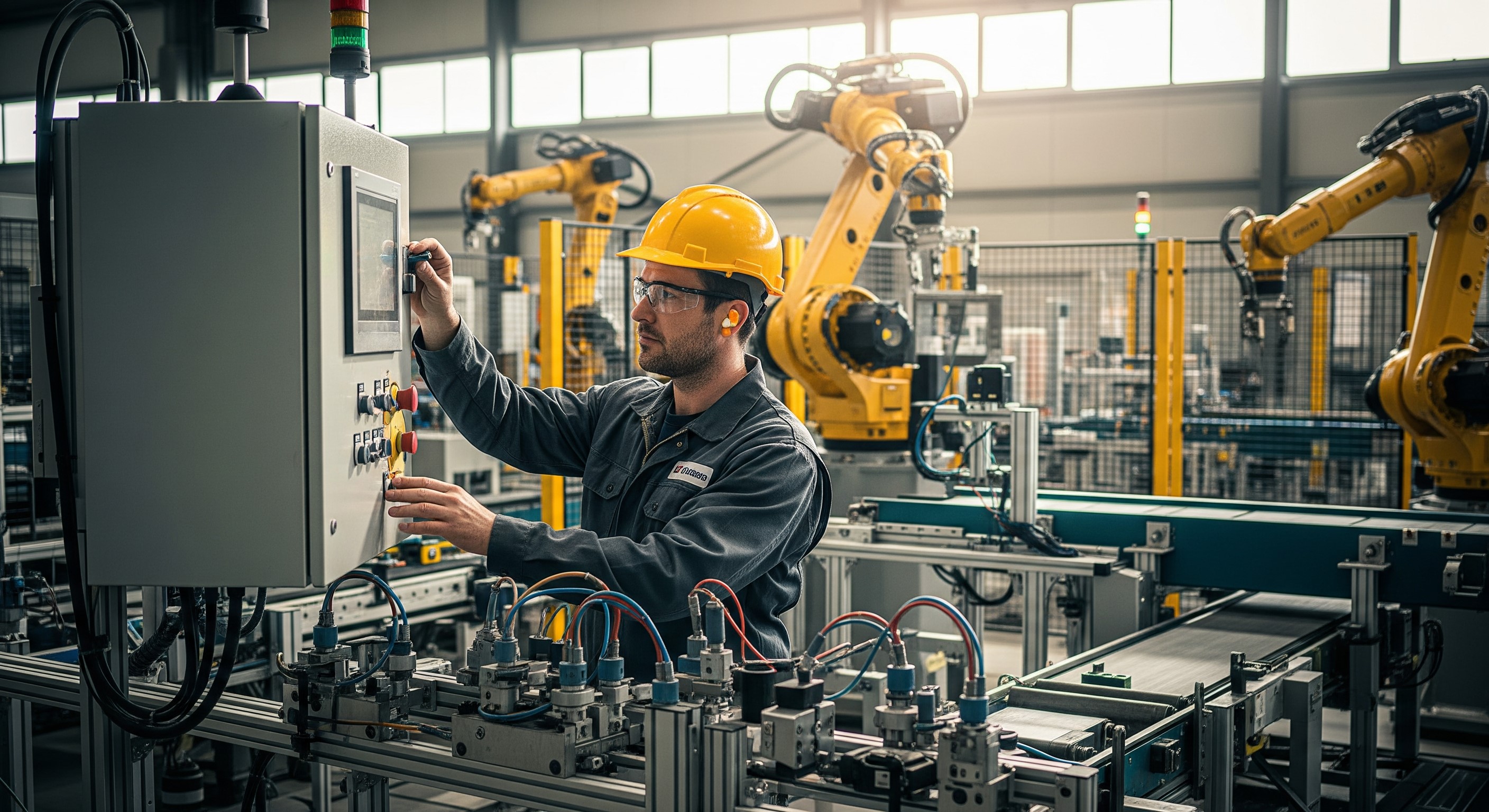
Automation Engineering
a guide to: Career
What is a Automation Engineering ?
Automation Engineering focuses on designing, programming, and maintaining automated systems using control systems, robotics, software, and instrumentation to improve efficiency, accuracy, safety, and productivity in industrial processes and manufacturing operations across diverse technology-driven industries worldwide.
Why is a Automation Engineering important?
Automation Engineering is vital as it revolutionizes industrial efficiency and safety. By replacing repetitive manual tasks with precise digital systems, it minimizes human error, lowers operational costs, and enables complex high-speed production.
- Enhanced Productivity:
- Increases output by allowing systems to run 24/7 without fatigue.
- Operational Safety:
- Removes humans from hazardous environments like chemical plants or extreme temperatures.
- Superior Precision:
- Ensures high-quality, consistent results that manual processes cannot replicate.
- Cost Savings:
- Reduces long-term expenses through optimized resource usage and waste reduction.
Ultimately, Automation Engineers are the architects of Industry 4.0. They empower global markets to meet growing demands sustainably, bridging the gap between traditional engineering and the future of intelligent machines.

Education Pathways
Option 01
Stream

Important Subjects
| # | Subject |
|---|---|
| 1 | Control Systems – Modeling, analysis, and control of dynamic industrial processes. |
| 2 | PLC Programming – Programming programmable logic controllers for automated industrial operations. |
| 3 | SCADA Systems – Supervisory control, monitoring, and data acquisition systems. |
| 4 | Industrial Instrumentation – Sensors, transmitters, and measurement systems used in automation. |
| 5 | Robotics – Automated machines, robotic arms, and industrial robot applications. |
| 6 | Embedded Systems – Microcontrollers and real-time automation system development. |
| 7 | Electrical Machines – Motors, drives, and control methods for automation systems. |
| 8 | Process Control – Control strategies for chemical, thermal, and manufacturing processes. |
| 9 | Industrial Networks – Communication protocols and fieldbus systems used in automated environments. |
| 10 | Mechatronics – Integration of mechanical, electrical, and software systems. |
| 11 | Safety Systems – Industrial safety standards, SIL concepts, and fail-safe automation designs. |
| 12 | Manufacturing Systems – Automated production lines and flexible manufacturing systems. |
Career Progression for a Automation Engineering
Qualification Levels:
- B.Tech/B.E. for entry roles;
- M.Tech/M.E. and certifications added advantage.
Role Levels & Growth:
- Entry Level: Junior Automation Engineer - Automation Engineer
- Mid-Level: Automation Engineer - Senior Automation Engineer
- Senior Level: Senior Automation Engineer - Automation Architect
- Executive Level: Automation Manager - Engineering Manager
Further Opportunities:
- Executive: Director of Eng.: Overseeing global automation operations and corporate technology roadmaps.
Sectors Offering
- Manufacturing & Smart Factories: Automated production lines, Industry 4.0 systems, digital twins, and smart manufacturing solutions.
- Automotive & Electric Vehicles: Automation for vehicle assembly, battery manufacturing, robotics, and EV powertrain production.
- Oil & Gas: Process automation, SCADA, safety systems, and control solutions for upstream, midstream, and downstream operations.
- Power & Renewable Energy: Automation of power plants, substations, grid management, solar, wind, and energy storage systems.
- Pharmaceuticals & Chemicals: Process control, batch automation, validation systems, and compliance-driven manufacturing automation.
- Food & Beverage Processing: Automated processing, packaging, quality control, and hygienic manufacturing systems.
- Aerospace & Defense: High-precision automation, robotics, testing systems, and mission-critical control applications.
- Warehousing & Logistics Automation: Automated storage and retrieval systems (ASRS), conveyor systems, robotic picking, and supply chain automation.
Expected Salary
Entry Level
- ₹5.0 - ₹9.0 LPA
Mid-Level
- ₹13.0 - ₹22.0 LPA
Senior Level
- ₹28.0 - ₹55.0 LPA
International
Entry Level
- $70,000 - $90,000 per annum
Mid/Senior Level
- $100,000 - $200,000 per annum
Design by Find Right Path