
Distributor Sales Representative
a guide to: Career
What is Distributor Sales Representative?
A Distributor Sales Representative (DSR) acts as the bridge between manufacturers and retail outlets. They manage a specific territory, promoting products, securing orders, and ensuring stock availability while building long-term relationships with dealers and retailers to drive consistent business growth.
Why is Distributor Sales Representative Important?
Distributor Sales Representatives are vital for market expansion and supply chain efficiency. They ensure products reach end-consumers by maintaining stock levels, resolving dealer grievances, and providing real-time market feedback to brands.
- Market Reach:
- Expands the brand's presence in diverse geographic territories.
- Relationship Management:
- Builds trust between the manufacturer and the local retail network.
- Sales Growth:
- Drives revenue through effective upselling and consistent order booking.
- Inventory Control:
- Monitors stock movement to prevent both shortages and overstocking.
Ultimately, DSRs are the frontline engine of a distribution network. Their ability to negotiate and manage logistics ensures product visibility, directly impacting a company’s bottom line and long-term market competitiveness.

Education Pathways
Option 01
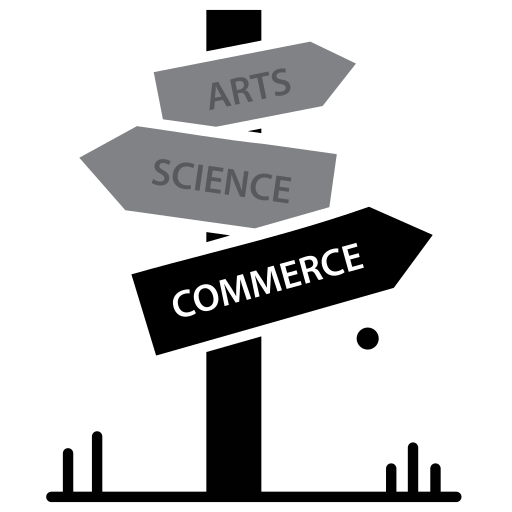
Stream
Important Subjects
| # | Subject |
|---|---|
| 1 | Sales Management – Techniques for managing sales processes and achieving organizational targets effectively. |
| 2 | Consumer Behavior – Understanding psychological factors influencing why and how customers buy products. |
| 3 | Marketing Research – Gathering and analyzing data about market trends and customer needs. |
| 4 | Supply Chain Management – Managing the flow of goods from production to final delivery. |
| 5 | Retail Management – Strategies for managing retail outlets and optimizing store sales performance. |
| 6 | Negotiation Skills – Mastering communication to reach mutually beneficial agreements with retailers. |
| 7 | Digital Marketing – Using online platforms and social media to promote distributed products. |
| 8 | Financial Accounting – Understanding profit margins, credit cycles, and basic business financial health. |
| 9 | Business Law – Learning legal regulations governing distribution contracts and trade practices. |
| 10 | CRM Tools – Using software like Salesforce to track leads and customer interactions. |
| 11 | Inventory Management – Techniques to balance stock levels and minimize wastage or costs. |
| 12 | Business Communication – Developing professional verbal and written skills for effective corporate interaction. |
Career Progression for a Customer Care Executive
Role Levels & Growth:
- Qualification: Class 12 / UG Degree + Communication/CRM training.
- Entry Level: Customer Care Executive, Call Center Agent, Front Desk Associate.
- Mid Level: Senior Customer Executive, Team Leader, Customer Support Analyst.
- Senior Level: Customer Relationship Manager, Operations Manager, Head of Customer Experience.
- Career Growth: Roles in customer service, sales support, client relationship management.
Further Opportunities: Setting up one's own CMA firm for cost audit and compliance services. Government: Entry into the Indian Cost Accounts Service (ICoAS) (Group A services). Academia: Teaching and research in universities.
Expected Salary
Entry Level
- ₹2 – 4 LPA.
Mid Level
- ₹4.0 – ₹7.0 LPA
Senior Level
- ₹7.0 – ₹12.0 LPA
International
Entry Level
- $35,000 – $55,000 per annum
Senior Level
- $60,000 – $90,000 per annum
Sectors Offering
- IT & BPO/KPO Industry
- E-commerce & Retail
- Banking & Financial Services
- Telecom & Internet Service Providers
- Travel, Tourism & Hospitality
- Healthcare & Insurance
- Consumer Goods (FMCG)
- Automobile & Manufacturing Services
- Education & EdTech
- Real Estate & Property Management
Design by Find Right Path