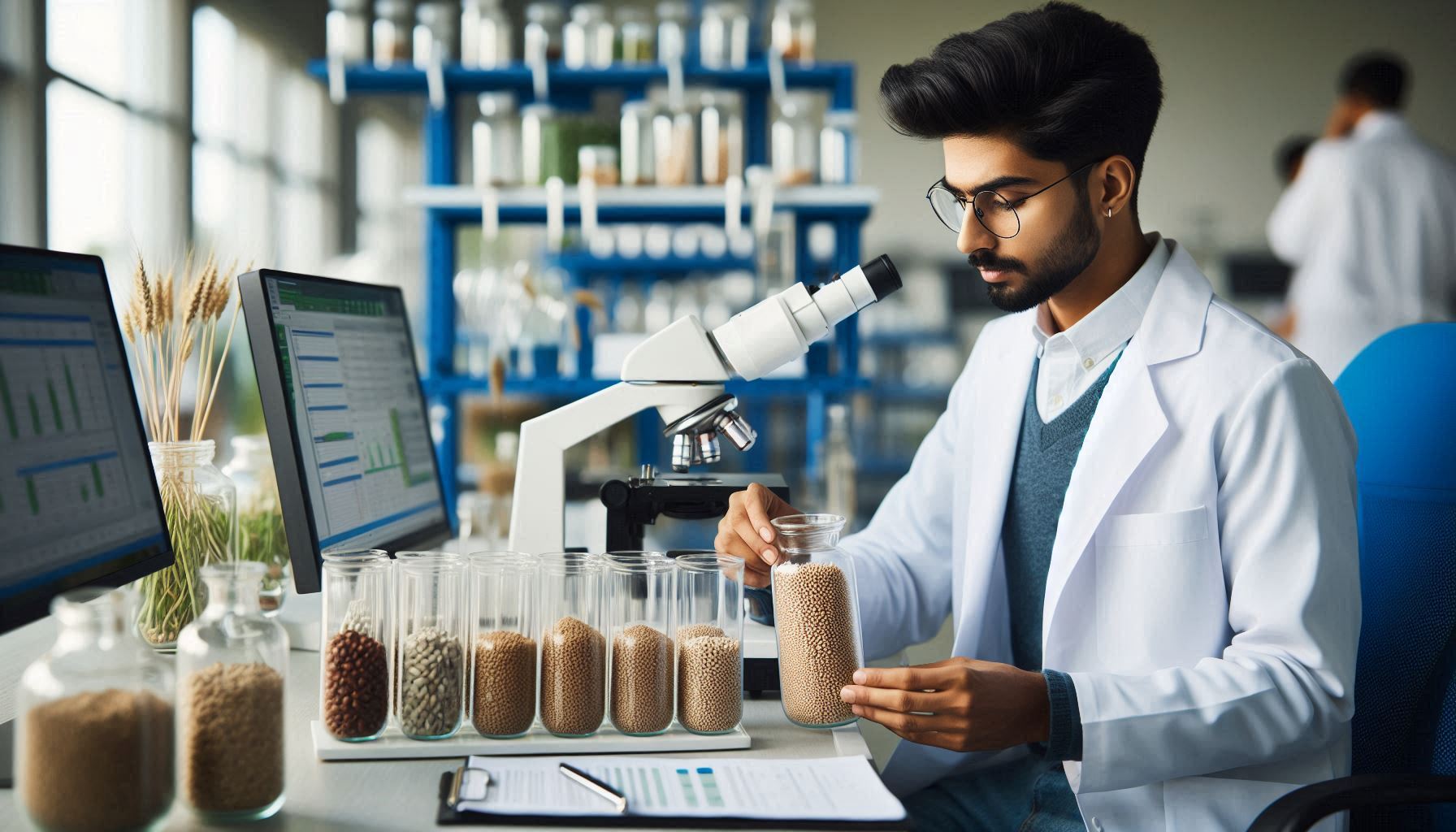
Seed Technologist
a guide to: Career
What is Seed Technologist?
Seed technologists are experts in seed quality and improvement. They test seed viability, purity, and germination, ensuring high-quality seeds for agriculture. They also develop and implement seed production and processing techniques, contributing to improved crop yields and food security.
Why is Seed Technologist Important?
Seed technologists are vital for ensuring healthy and productive crops. They improve seed quality, leading to higher yields and better crop performance. Their expertise helps farmers and contributes to global food security by maximizing agricultural output.
- Improved Crop Yields:
- Ensuring high-quality seeds for better harvests.
- Enhanced Food Security:
- Contributing to increased agricultural productivity.
- Disease Resistance:
- Developing seeds resistant to pests and diseases.
- Sustainable Agriculture:
- Promoting efficient use of resources through quality seeds.

Education Pathways
Option 01
Option 02
Option 03
Stream

Important Subjects
| # | Subject |
|---|---|
| 1 | Seed Biology: Understanding seed structure, development, and germination. |
| 2 | Plant Breeding: Methods for improving plant varieties through genetic selection. |
| 3 | Seed Production: Techniques for growing and harvesting quality seeds. |
| 4 | Seed Certification: Standards and procedures for certifying seeds for quality. |
| 5 | Seed Testing: Methods to assess seed viability, purity, and germination rates. |
| 6 | Soil Science: Understanding soil types, fertility, and management practices. |
| 7 | Pest and Disease Management: Techniques for preventing seed and crop diseases. |
| 8 | Agronomy: Knowledge of crop production and management practices. |
| 9 | Genetics: Principles of heredity and their application in seed improvement. |
| 10 | Seed Storage and Handling: Best practices for maintaining seed quality during storage. |
| 11 | Plant Pathology: Study of plant diseases that can affect seed production. |
| 12 | Crop Management: Strategies for efficient and sustainable crop cultivation. |
Where to study?
Career Progression for a Seed Technologist
Entry-Level Positions
Job Role:
- Seed Technologist
- Seed Quality Analyst
- Seed Testing Technician
Education Required:
- Bachelor's degree in Agriculture, Horticulture, Seed Technology, or a related field.
- Possible certifications in seed technology or quality management.
Mid-Level Positions:
Job Role:
- Senior Seed Technologist
- Seed Production Manager
- Seed Quality Control Manager
Education Required:
- Bachelor's degree (as mentioned above).
- Master’s degree in Seed Technology, Plant Breeding, or Agronomy (optional but beneficial).
Senior-Level Positions:
Job Role:
- Seed Production Director
- Research Scientist (Seed Technology)
- Head of Seed Certification
Education Required:
- Master’s degree in Seed Technology, Plant Breeding, or a related field.
- Ph.D. in Plant Breeding, Seed Technology, or Genetics (for research-focused roles).
Executive/Consultant Roles:
Job Role:
- Seed Technology Consultant
- Chief Agronomist
- Director of Research and Development (Seed Companies)
Education Required:
- Master’s degree or Ph.D. in Seed Technology, Plant Breeding, Genetics, or related fields.
Expected Salary
Entry-Level
- ₹3.0 – ₹6.0 LPA
Mid-Level
- ₹6.0– ₹10.0 LPA
Senior-Level
- ₹10.0 – ₹20.0 LPA
Advanced-Level
- ₹15.0 – ₹30.0 LPA
International
Entry Level
- $25,000 - $45,000 per annum
Mid/Senior Level
- $45,000 - $150,000 per annum
Sectors Offering
- Seed Production Industry
- Agricultural Research and Development
- Government and Regulatory Bodies
- Agricultural Consulting and Advisory Services
- Crop Protection and Pest Management
- Seed Certification and Quality Control
- Biotechnology and Genomics
- Agro-processing and Food Industry
- International Agricultural Organizations
- Non-Governmental Organizations (NGOs)
- Organic Farming and Sustainability Sector
- Educational and Training Institutions
Design by Find Right Path