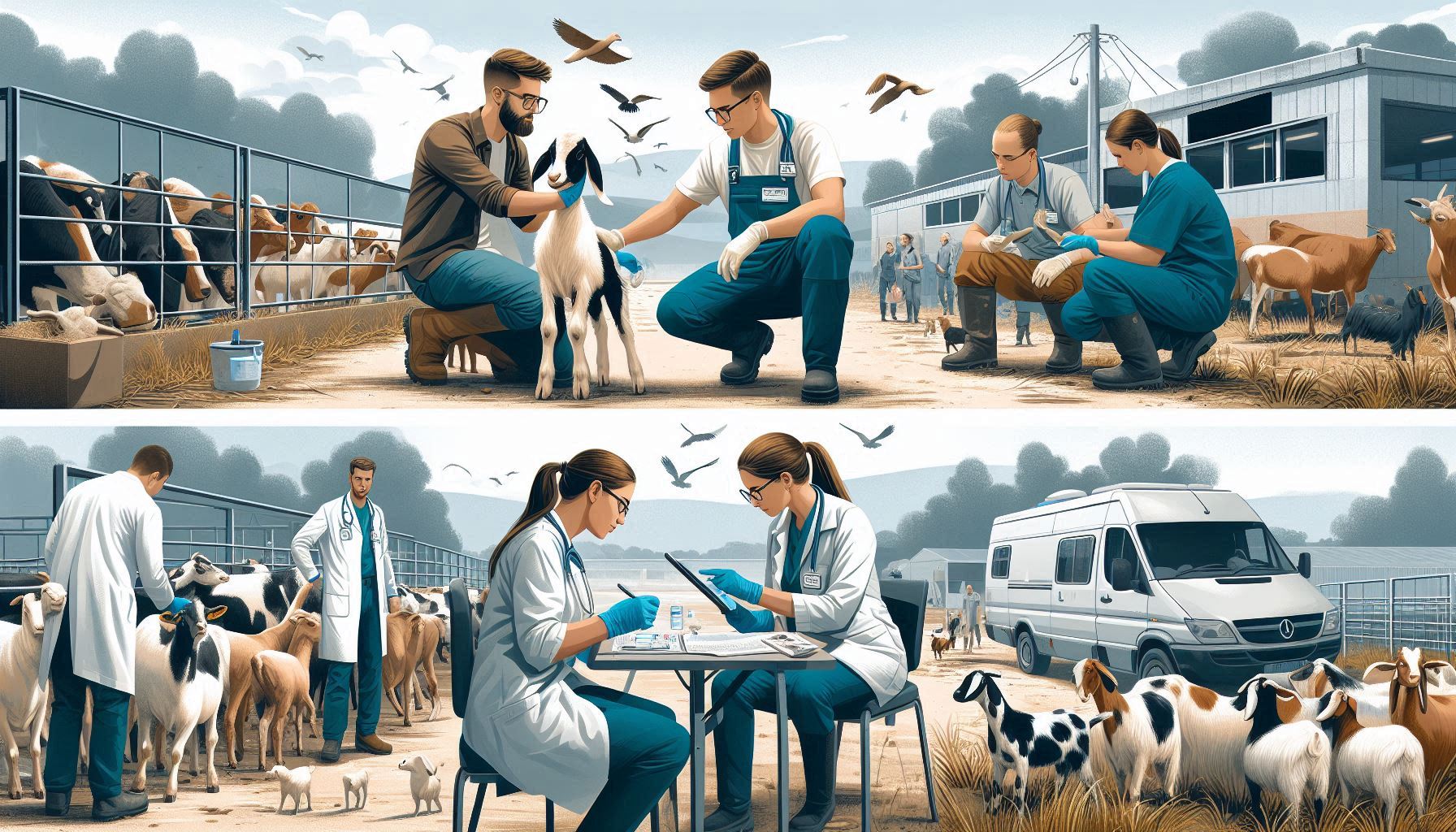
Animal Health Worker
a guide to: Career
What is Animal Health Worker?
Animal Health Workers (AHW) are on the front lines of animal care, providing essential support in veterinary settings. They work alongside veterinarians and other professionals, assisting with everything from diagnosing illnesses and administering treatments to implementing preventative health measures.
Why is Animal Health Workers(AHW) Important?
Animal Health Workers (AHWs) are vital guardians of animal well-being, preventing disease outbreaks, supporting veterinarians, and boosting farm productivity. They educate communities, ensure humane care, and safeguard public health, enhancing agricultural prosperity and stability.
- Bridging the Veterinary Care Gap:
- AHWs provide essential services in areas with limited access to veterinarians, offering a cost-effective solution for basic animal health needs.
- Improving Animal Health and Welfare:
- By focusing on preventive care, early intervention, and promoting best practices, AHWs contribute to healthier and more productive livestock.
- Enhancing Livestock Productivity and Economic Benefits:
- Reduced livestock losses and increased productivity directly improve farmers' income and contribute to food security.
- Protecting Public Health:
- HWs play a crucial role in controlling zoonotic diseases and contributing to the safety of the food supply.

Education Pathways
Option 01
Option 02
Option 03
Stream

Important Subjects
| # | Subject |
|---|---|
| 1 | Animal Anatomy and Physiology: Study of the structure and function of animals' bodies to understand how different systems work. |
| 2 | Animal Nutrition: Study of animal feeding practices, nutritional needs, and dietary requirements for healthy growth and productivity. |
| 3 | Animal Diseases: Understanding common diseases in animals, their symptoms, causes, and treatment methods. |
| 4 | Veterinary Pharmacology: Knowledge of the use of drugs and medications in animal care, including dosages and administration techniques. |
| 5 | Veterinary Microbiology and Parasitology: This covers the study of microorganisms (bacteria, viruses, fungi) and parasites that cause diseases in animals, as well as methods for their identification and control. |
| 6 | Veterinary Pathology: This involves understanding the nature of diseases, including the changes they cause in tissues and organs. It helps in understanding disease processes and diagnosis. |
| 7 | Clinical Examination and Diagnostic Techniques: This focuses on developing skills in performing physical examinations, taking vital signs, collecting samples (blood, feces, etc.), and using basic diagnostic tools. |
| 8 | Animal Handling and Restraint: This teaches safe and humane techniques for handling and restraining different animal species for examination, treatment, and other procedures. |
| 9 | First Aid and Emergency Care: This covers basic first aid procedures for common injuries and emergencies in animals, as well as knowing when to refer to a veterinarian. |
| 10 | Veterinary Public Health: This emphasizes the link between animal and human health, including zoonotic diseases, food safety, and public health concerns related to animal production. |
| 11 | Extension and Communication Skills: This focuses on developing effective communication and interpersonal skills to interact with livestock owners, provide advice, and promote best practices. |
| 12 | Animal Welfare and Ethics: his covers the principles of animal welfare, ethical considerations in animal care, and promoting humane treatment of animals. |
Where to study?
Career Progression for an Agricultural Engineer
Entry-Level (Fresh Graduate / Newcomer)
Role:
- Animal Health Worker
- Veterinary Assistant
- Animal Caretaker
Qualifications:
- Diploma in Animal Health Care, Diploma in Animal Husbandry, or Certificate in Veterinary Assistance.
Duration:
- 1-2 years for certificate/diploma programs.
Mid-Level (3-5 Years of Experience)
Roles:
- Senior Animal Health Worker
- Veterinary Technician
- Livestock Health Specialist
Qualifications:
- Bachelor’s Degree in Veterinary Science (BVSc) or additional specialized certifications in animal care or livestock management.
Duration:
- 4-5 years for a BVSc degree.
Senior-Level (5+ Years of Experience)
Roles:
- Veterinary Officer
- Animal Health Supervisor
- Animal Health Consultant
Qualifications:
- Postgraduate Diploma/Certification in Animal Health Management, Veterinary Public Health, or Master’s in Animal Science or Veterinary Science.
Duration:
- 2 years for a postgraduate diploma.
Expected Salary
Entry-Level (0-2 Years)
- ₹1.2 – ₹2.6 LPA
Mid-Level (3-10 Years)
- ₹1.8 – ₹4.2 LPA
Senior-Level (10+ Years)
- ₹3.6 – ₹6.0+ LPA
International
Entry Level
- $25,000 - $40,000 per annum
Mid/Senior Level
- $35,000 – $60,000 per annum
Sectors Offering
- Veterinary Hospitals and Clinics
- Livestock and Dairy Farms
- Government Veterinary Services
- Research Institutes and Animal Health Organizations
- NGOs and Animal Welfare Organizations
- Agricultural and Farming Extension Services
- Pharmaceutical and Animal Health Companies
- International Development Organizations
- Private Animal Healthcare Clinics
- Zoos and Wildlife Conservation Centers
- Pet Care Industry
- Government Veterinary Training Institutes
Design by Find Right Path